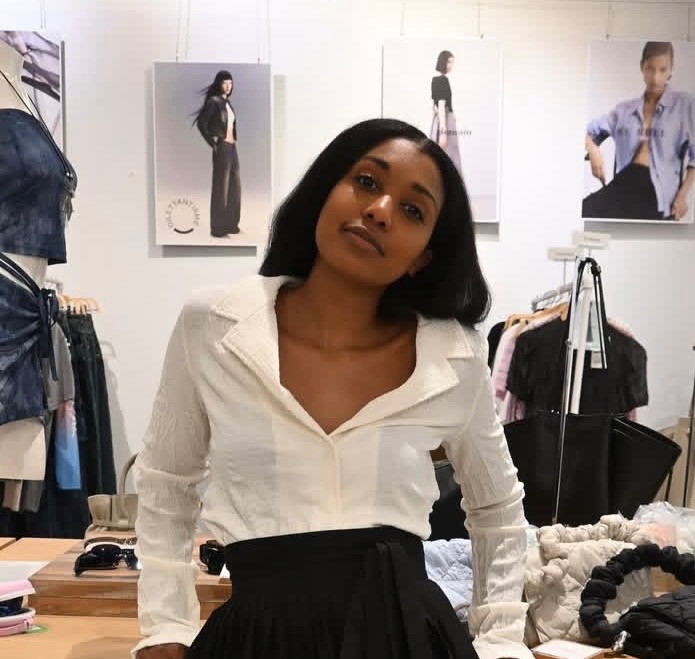
This piece was written in partnership with Korean fashion retailer, Ooahan
When I was offered the chance to partner with a contemporary K-fashion retailer, I was a bit skeptical. After all, I knew nothing about Korean fashion. Nevertheless, I welcomed the learning opportunity, the chance to explore some new brands, and a market I hadn’t spent much time in. This girl can’t turn down a shopping adventure.

I was also hesitant because the opportunity came from a retailer located in a shopping mall. American Dream, to be exact. The massive retail and entertainment complex in New Jersey with a growing roster of international as well as luxury fashion retailers.
Now, I remember, very clearly, the heyday of the American shopping mall of my childhood.
Those were simpler times, waiting for the latest Victoria’s Secret drop, thumbing through new music releases at Sam Goody, and taking in the smell of Cinnabon wafting through the mall corridors.
It was this nostalgia, paired with my own curiosity, that pulled me in. So I headed to Jersey for a visit to the first pop-up location of Ooahan, a retailer that curates a collection of emerging Korean designer brands.


My hesitation going in wasn’t really about going to the mall (although, these days, even the thought of stepping foot into a shopping mall elicits a sense of internal dread). It was about what the mall has come to represent to me. Fast fashion, trend cycles, clothes designed to be worn for one season and forgotten. And I’ve been slowly… painstakingly building my entire way of dressing in opposition to that.
But standing in Ooahan, I realized I’d been conflating two things that aren’t actually the same: new and disposable. Fast fashion is defined by trend-chasing over craft and volume over value. Curation is the opposite of that, whether the rack is full of archival vintage or last month’s runway.
So I decided to test that theory. If curation is really the antidote to fast fashion (not vintage specifically, but intentionality), then I should be able to take any piece in that store and style it so it reads as considered and timeless instead of trend driven.
The Style Challenge
A few of the pieces I pulled were, by any definition, trendy, be it a bold logo placement or an exaggerated silhouette. But beyond just wearing the labels, I wanted to prove these clothes could transcend the trend cycle they were born into. And while I still also had some fun with trendy styling, I quickly pivoted my focus back to elevation.

Trust in Thine Own Palette
From the outset, everything I styled was grounded in staying true to my preferred palette. Even surrounded by directional colorways and statement prints, I kept gravitating toward neutrals because these are the tones that already anchor everything else in my closet. While I do enjoy a pop of color occasionally, I’ve noticed that the pieces that actually earn a permanent place in my wardrobe are the ones that fit within a palette I already trust, not the ones that happened to be loudest on the rack. And this is generally consistent with how I shop for clothes. I filter every trend through the lens of ‘does this actually belong in my story.’ Shopping with that focal point in mind helps ensure longevity for anyone.


Give A Nod to Texture & Technique
For what my options lacked in color, I made up for in texture and technique, which did a lot of the elevating. From lace trimmed satin, cascading ruffles, bouclé, to plissé, details like these read as craft instead of trendy, regardless of when it was made. Where a bold logo or graphic ties a garment to a very specific season, a well-executed ruffle or a plissé pleat is really a nod to technique that has existed in fashion for generations. So leaning into those details allowed me to have fun with texture without the outfit ever feeling tied to a single moment in time.

Mix and Match the Eras
Beyond this, I loved mixing eras. Pairing a brand-new piece with something worn-in or some of my vintage shoes did more to elevate the new piece than anything else I tried. It borrowed credibility from the old, and in exchange, made the vintage feel fresh again.
I also leaned on proportion. Wide-leg trousers, high-waisted silhouettes, midi lengths (just below the knee or closer to the ankle for those of us who are height-challenged), fitted tops layered under an oversized, structured jacket. These are shapes I already gravitate toward in my own closet. I was especially drawn to the hanbok and chima-inspired pieces (traditional Korean, high-waisted, wrap-around skirts I was already a little obsessed with) I found across brands (more on that later). And because these silhouette is rooted in traditional dress, they don’t date the way a passing trend does, which is a much more durable kind of style decision.


Streamline those Accessories
True to my nature, I edited my accessories down to almost nothing. Trend pieces often come loaded with their own visual noise. Removing everything else allowed the garment’s actual construction, fabric, and cut, to shine. Toning down accessories is really a personal choice I made a while back (not shoes. Shoes are not accessories. Shoes are SHOES). I grew frustrated not only with the simple upkeep of storing the plethora of jewelry, handbags, scarves, hats that I collected over time but with the amount of fidgeting, adjusting and accounting I was always doing while wearing these items. It became a little exhausting. Now, I keep it simple and may choose only one or two accessories to indulge in (beyond my everyday, staple jewelry).

The Standouts
RE RHEE
I’d be remiss if I didn’t highlight my favorite discovery of the day: RE RHEE, a Seoul-based label founded in 2019 by Central Saint Martins grad, Junbok Rhee, whose training shows in the structured silhouettes and understated tailoring throughout the collection. The name ‘Re’ plus ‘Rhee’ is a nod to ‘finding oneself again,’ and that sentiment tracks because his pieces feel less like trend statements and more like quiet, considered basics elevated through cut and fabrication. RE RHEE also leans into sustainable materials like recycled wool and Tencel blends. All of these pieces appealed to my sensibilities and felt made to keep. Here are a few standout pieces from RE RHEE worth the closet space:


Ondata: PARANG
Ontada: PARANG is a contemporary South Korean fashion and design studio founded by designer Sujin Yoo. Ontadameans waves or ripples, inspired by the powerful, flowing movement of ocean tides. And that’s exactly how I’d describe Yoo’s designs with a goth edge. Her brand modernizes traditional Hanbok heritage, using traditional Korean fabrics and structural lines rather than standard commercial satin. Aesthetically, the brand is heavily influenced by rock music and reinterprets royal garments and heritage elements into modern everyday wear like structured jackets, oversized coats, and full skirts. I especially loved these sheer garments that still speak to the brand’s rock aesthetic but can easily be adapted for everyday wear.


The Art of Curation
It goes without saying that you don’t need vintage clothing specifically to dress with intention. But you do need a point of view. Choosing a focal point, zeroing in on proportion over logo, mixing different eras, editing down the noise will work on anything in your closet, thrifted or brand new, twenty years old or twenty minutes off the runway.
Ooahan is actually doing something a lot closer to what I’ve been working toward for so long than what I remember from the mall of my childhood. Instead of chasing volume, it’s curating a point of view and trusting the customer to build their own story around it. That’s the opposite of fast fashion.

Ultimately, eco-friendly materials only go so far. Real sustainability is less about what a garment is made from and more about how long it stays in circulation, since the most sustainable practice will always be buying less and reusing more. The real dividing line is disposable versus intentional. And once I stopped styling for the trend cycle and started styling for longevity, even the loudest, most-of-the-moment piece in the store started to look like it could live in my closet for years to come.
